
The Question and Its Moment
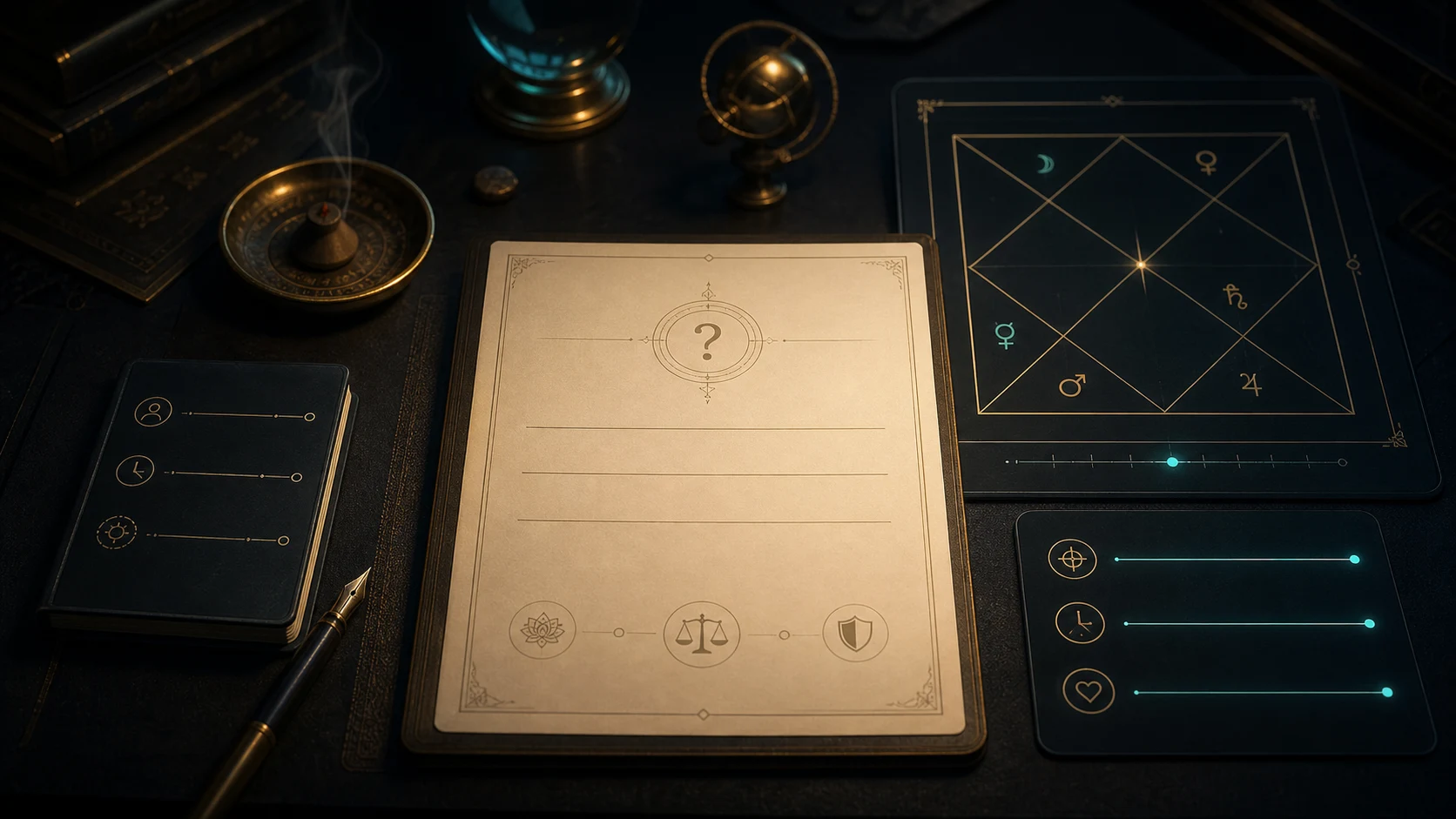
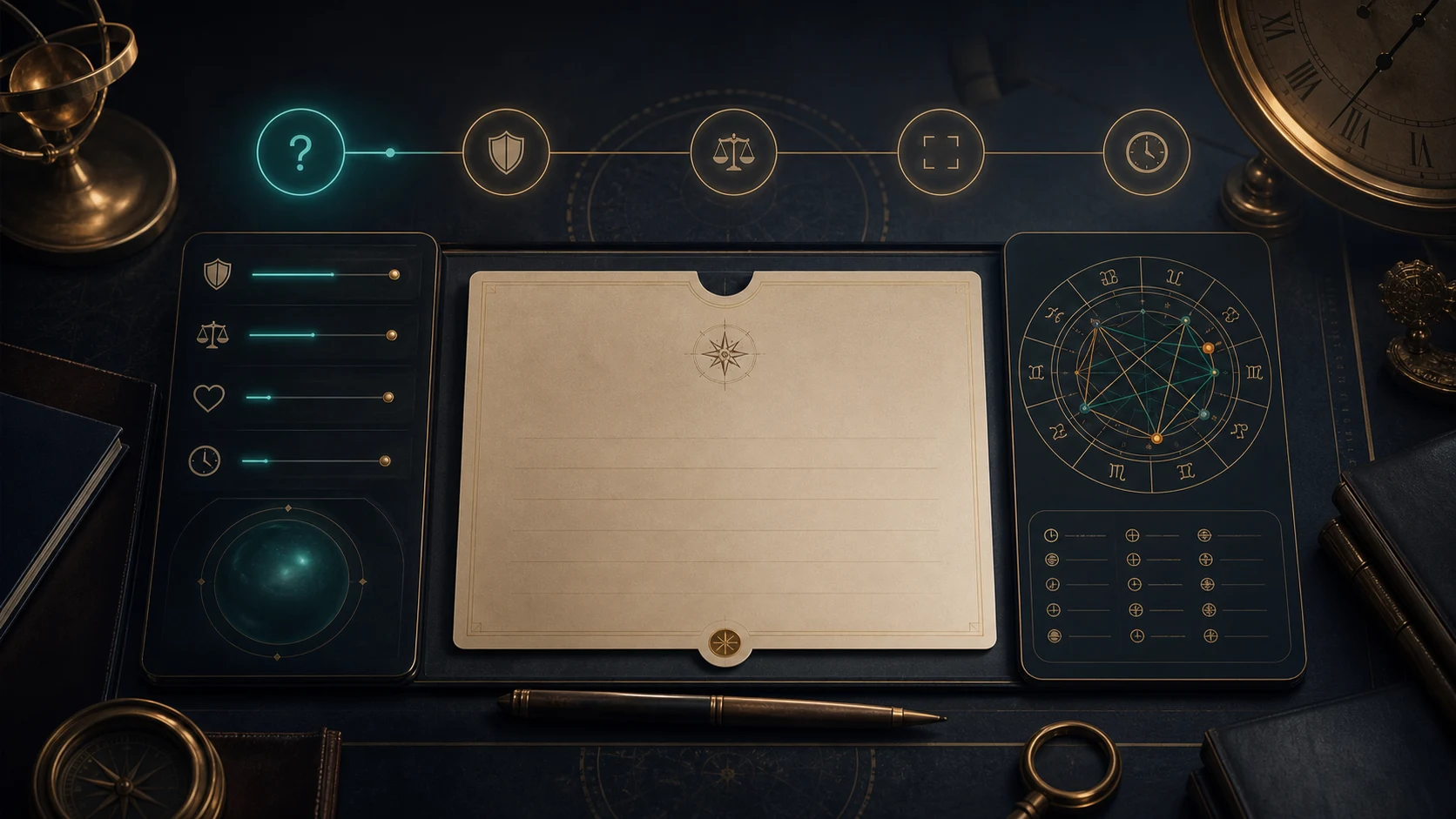
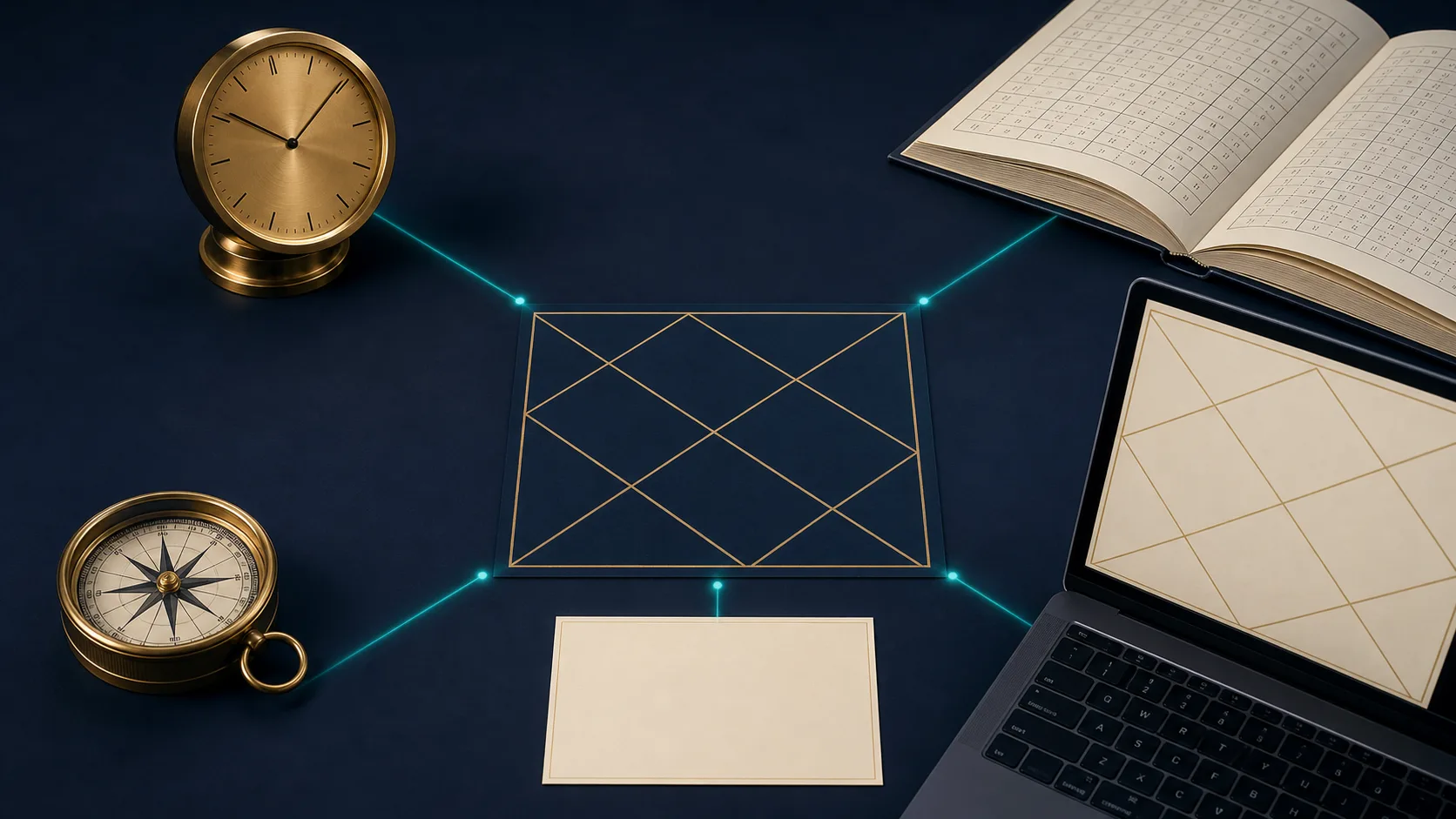
Turn a broad concern into one sincere, specific enquiry and record the time and place used to cast the Prashna chart without repeatedly changing the question.
Bring one sincere question into focus, cast the chart of its moment, weigh the evidence, and answer only what the chart can responsibly support.
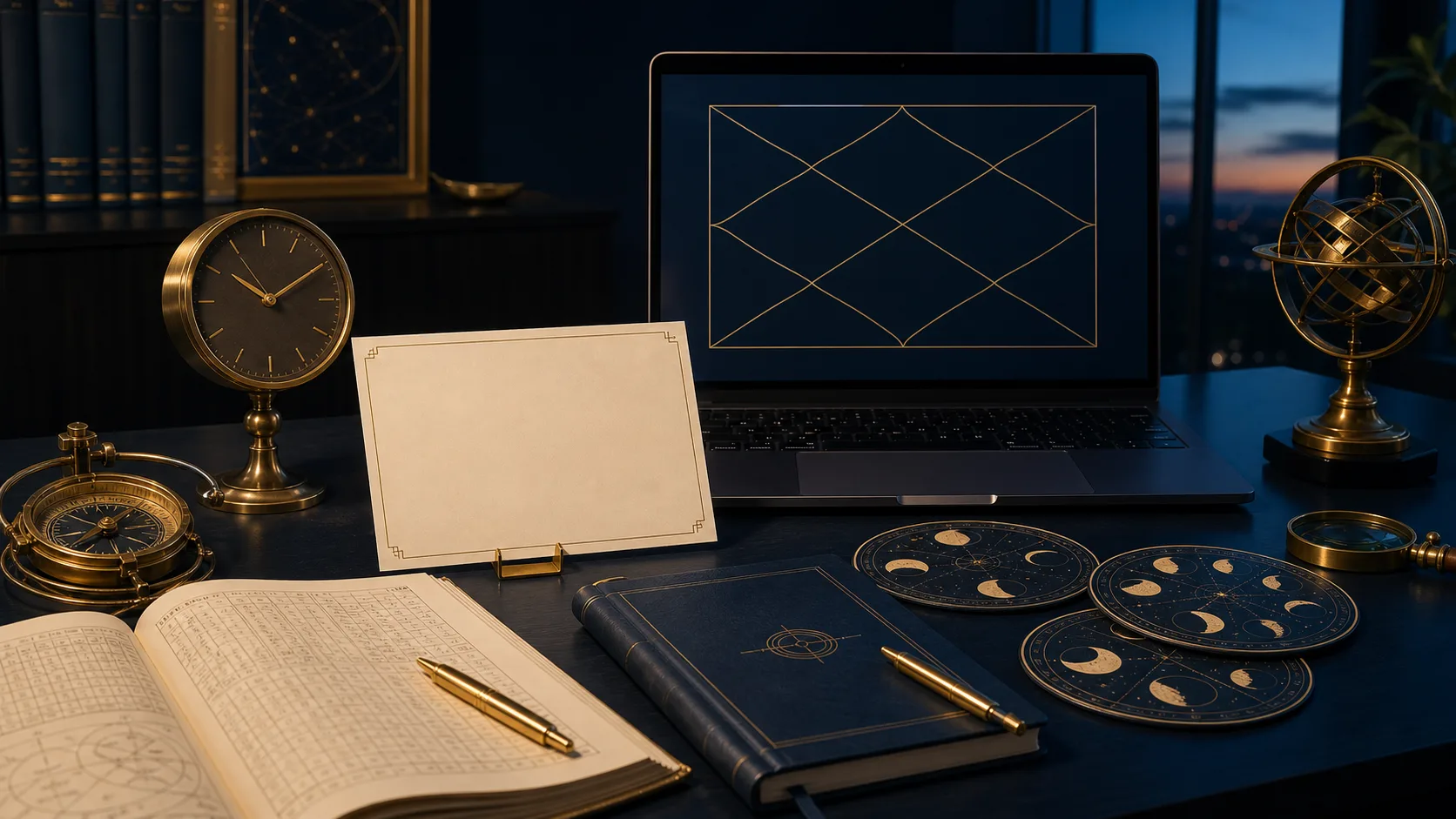
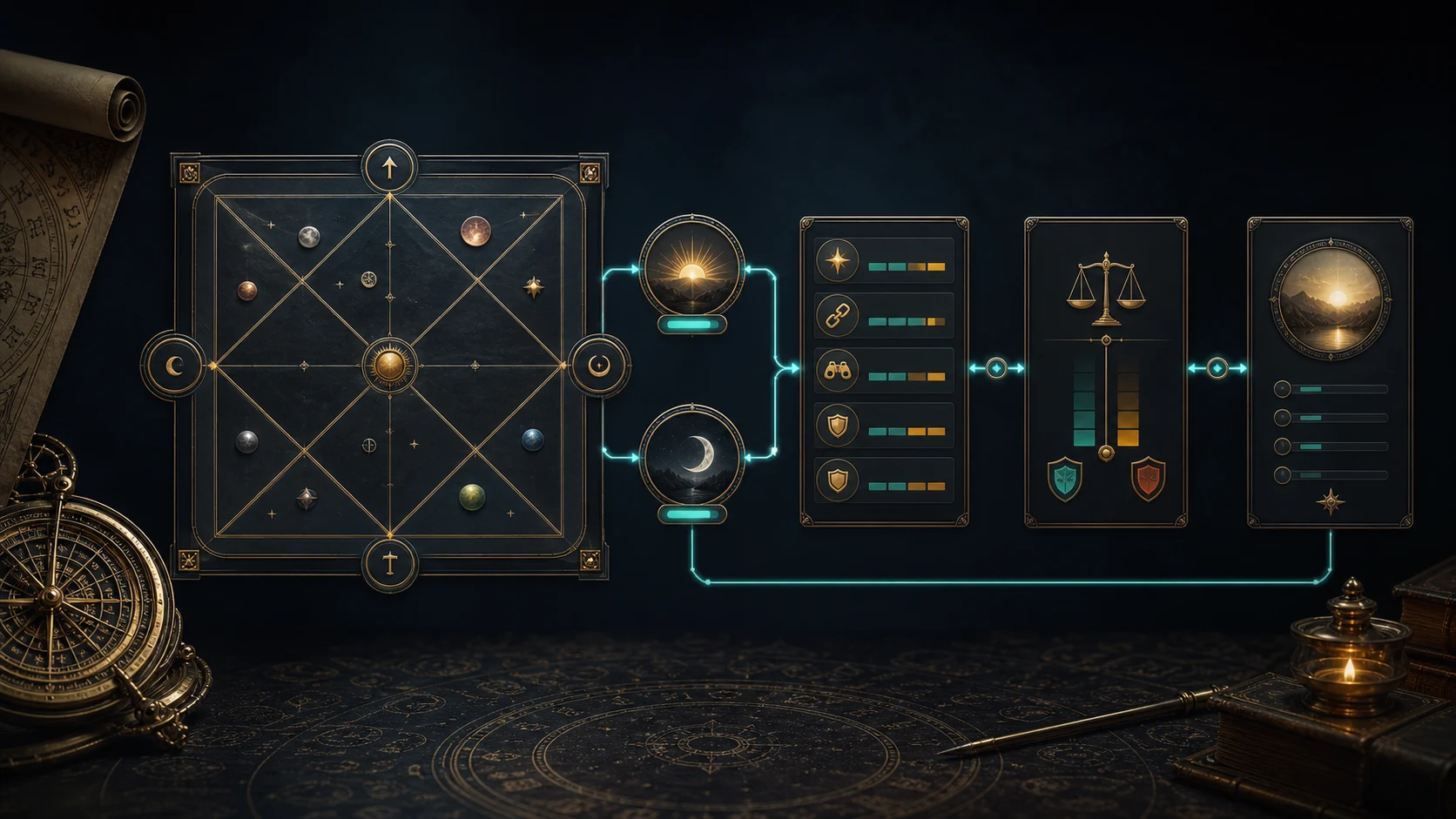
Prashna moves from one clearly framed enquiry into the chart of that moment, then weighs lagna, houses, significators, planetary testimony, timing clues, and responsible limits before giving an answer.
Turn a broad concern into one sincere, specific enquiry and record the time and place used to cast the Prashna chart without repeatedly changing the question.
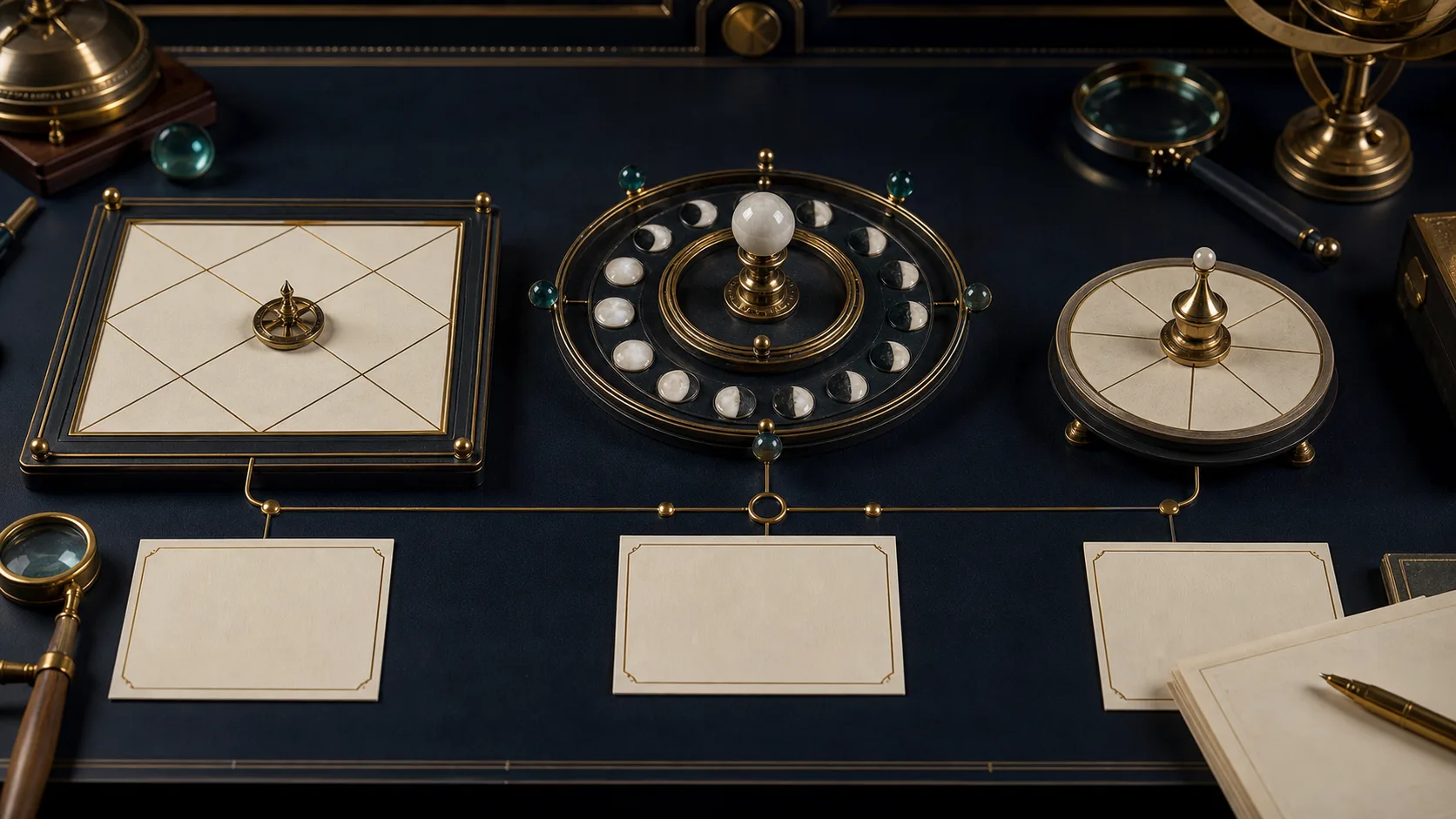
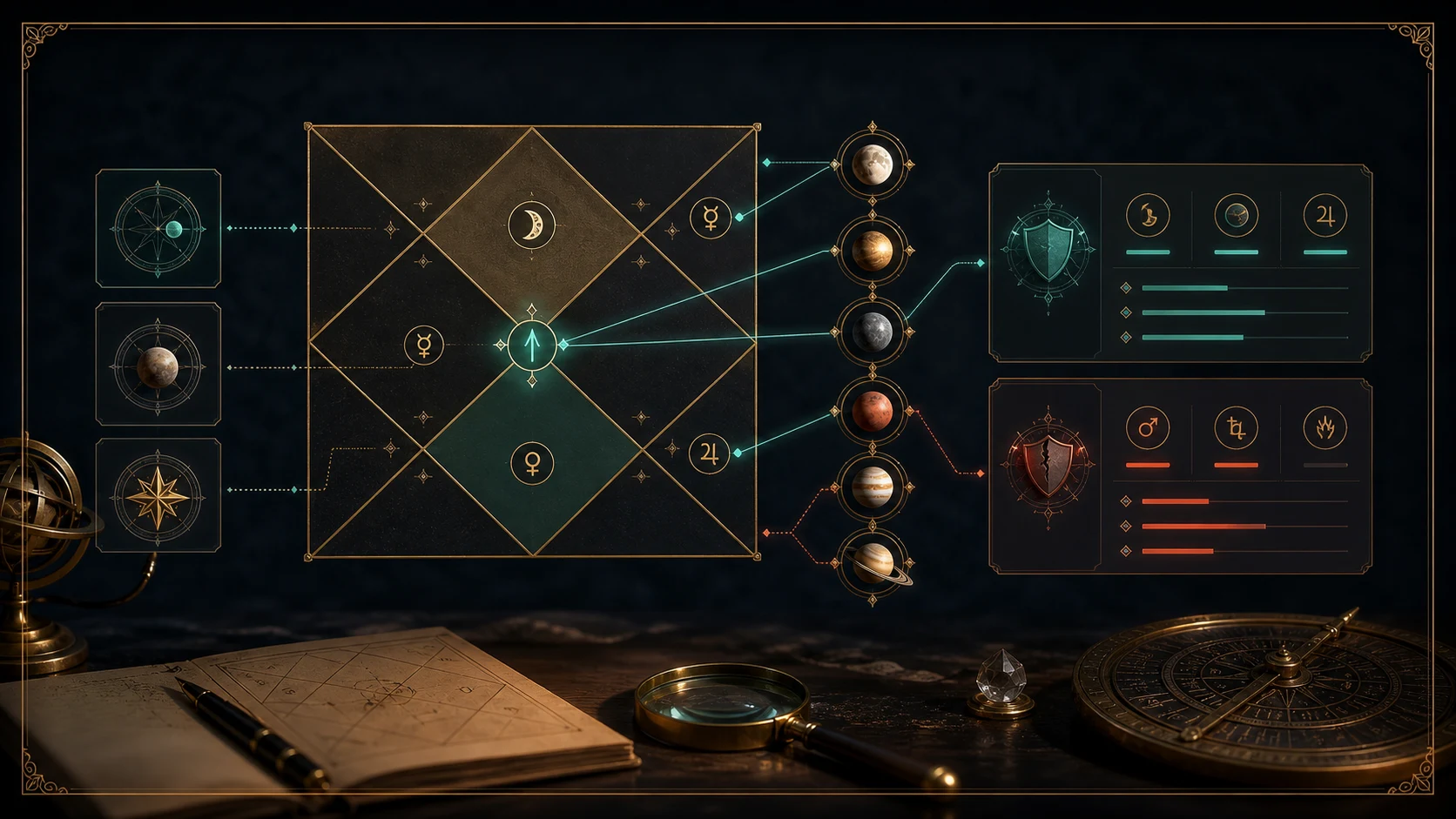
Read the Prashna Lagna and its lord for the querent, the Moon for the mind and unfolding matter, and the relevant house lord or Karyesh for the subject being asked about.
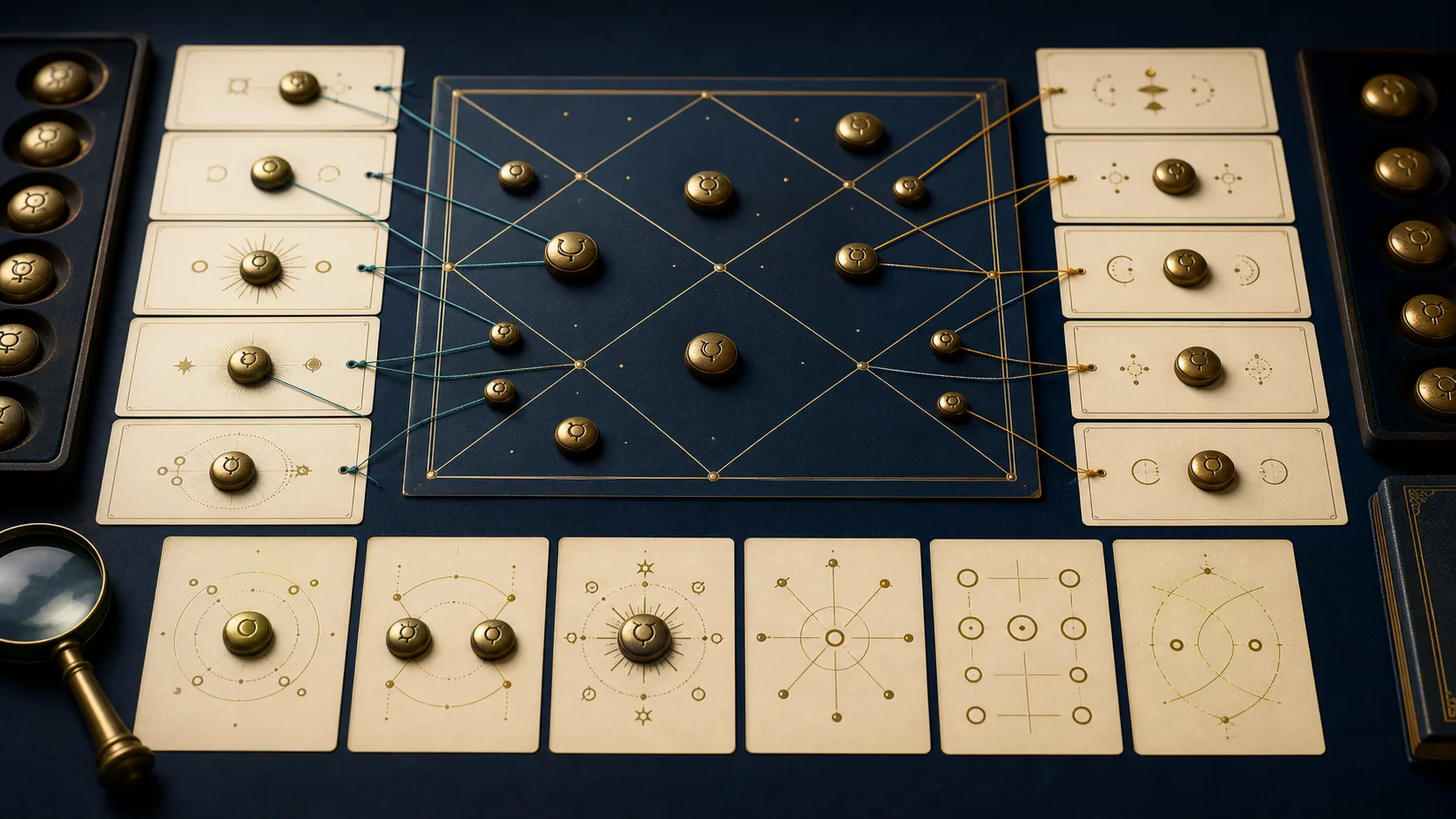
Compare houses, lords, significators, strength, dignity, aspects, conjunctions, and supportive or obstructive influences instead of judging from a single placement.
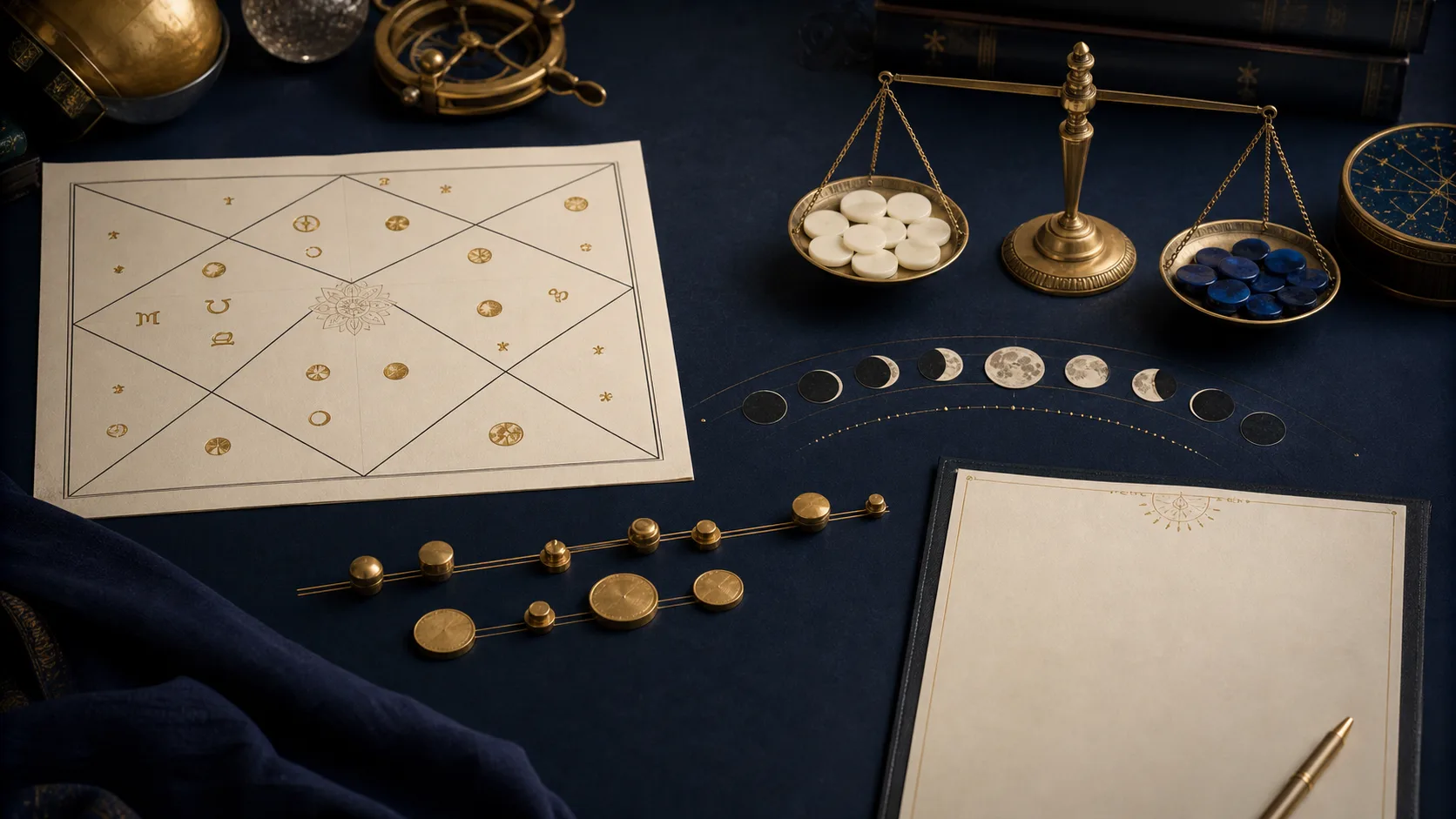
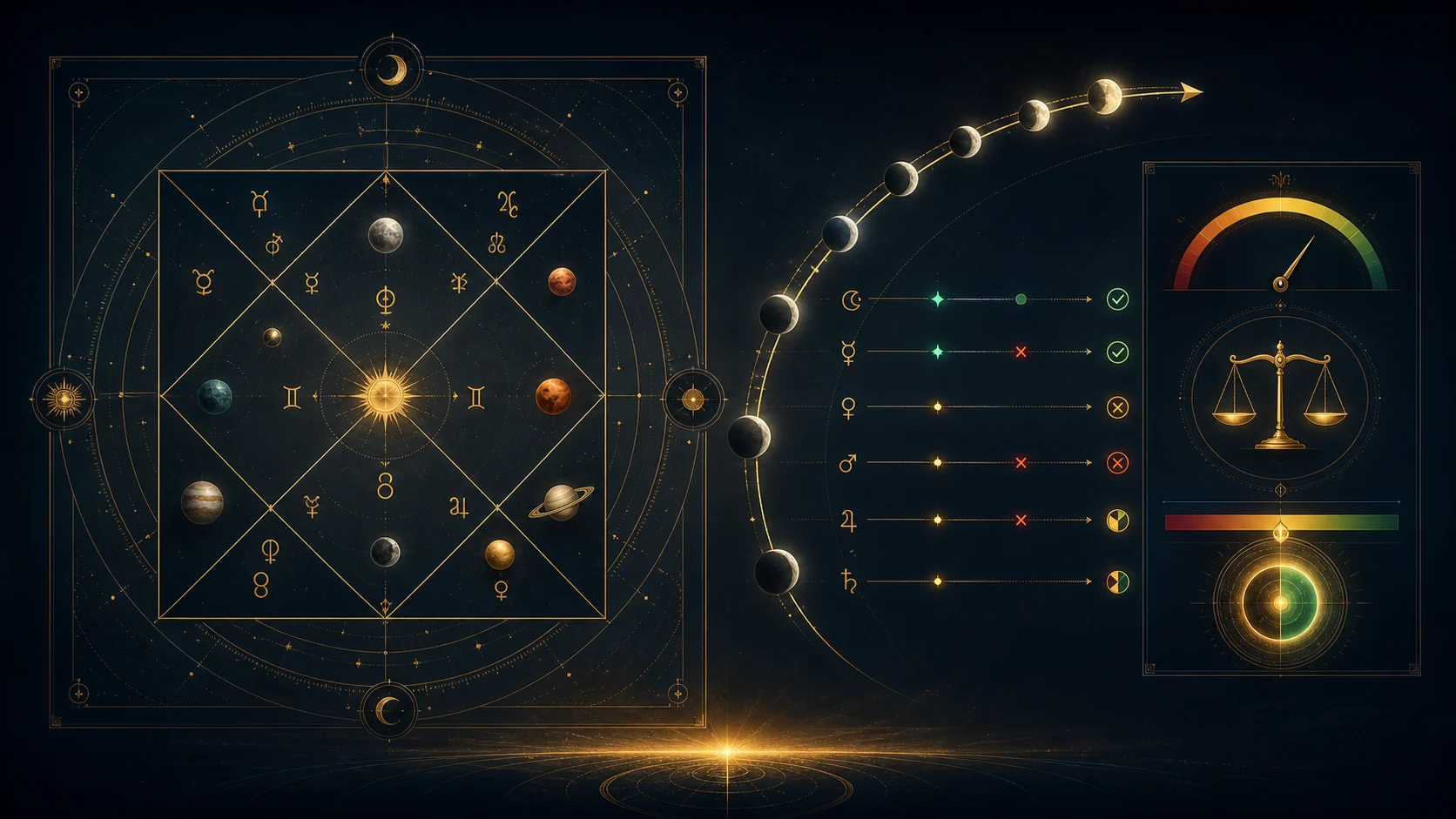
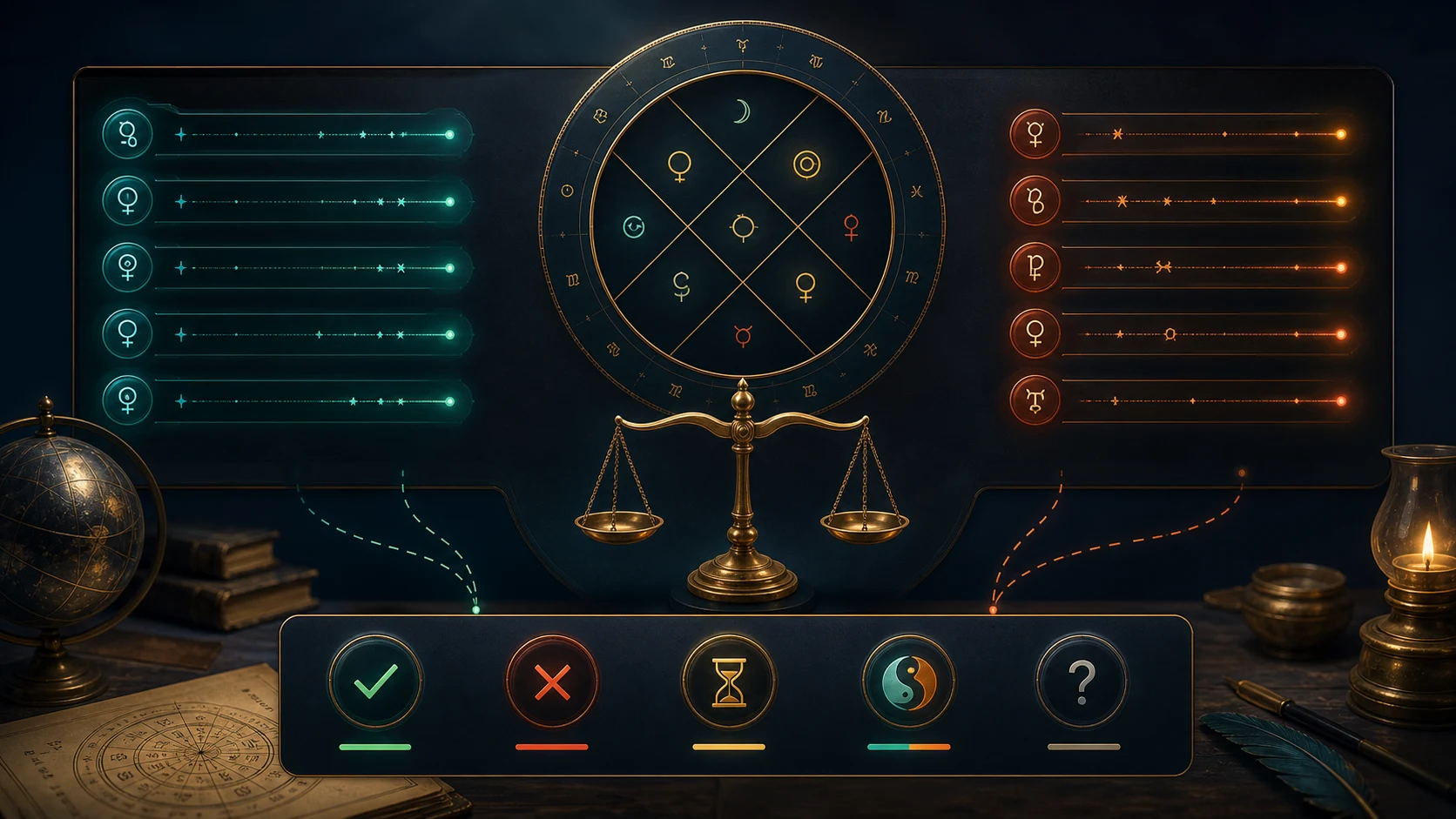
Synthesize the evidence into a favourable, obstructed, delayed, or mixed judgement, then study broad timing cues only when the chart supports a responsible answer.
The curriculum follows a complete Prashna workflow: clarify the question, cast the moment chart, identify the relevant houses and significators, weigh the evidence, add timing only where supported, and communicate the result responsibly.
Practice separates wording, chart setup, house choice, significator judgement, timing, and answer synthesis so every conclusion can be checked and revised.
Convert broad concerns into one sincere, answerable enquiry with a clear boundary.
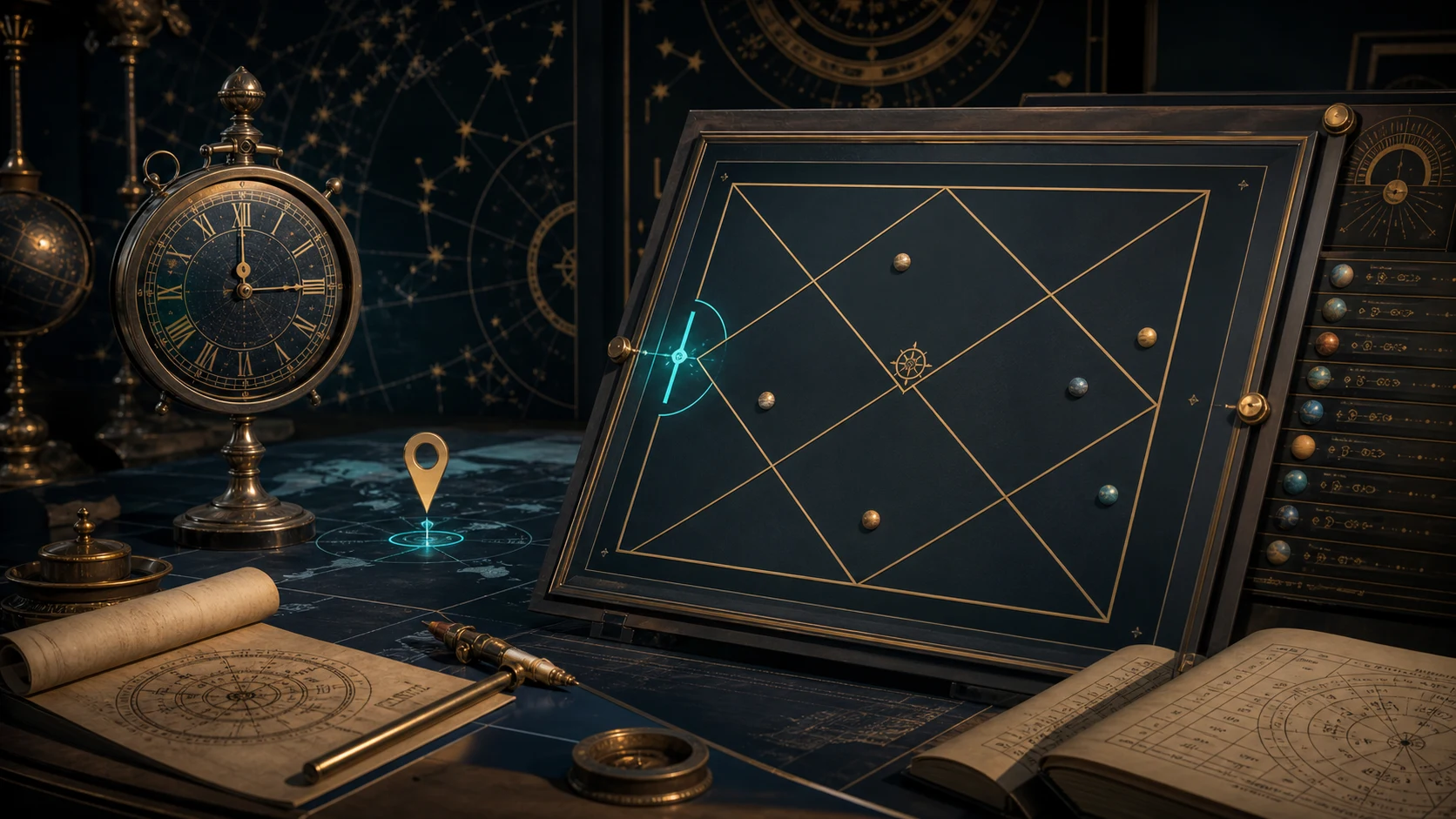
Record the received moment, verify inputs, and prepare the chart before judging.
Choose the relevant house, karyesh, Moon, and supporting significators with evidence.
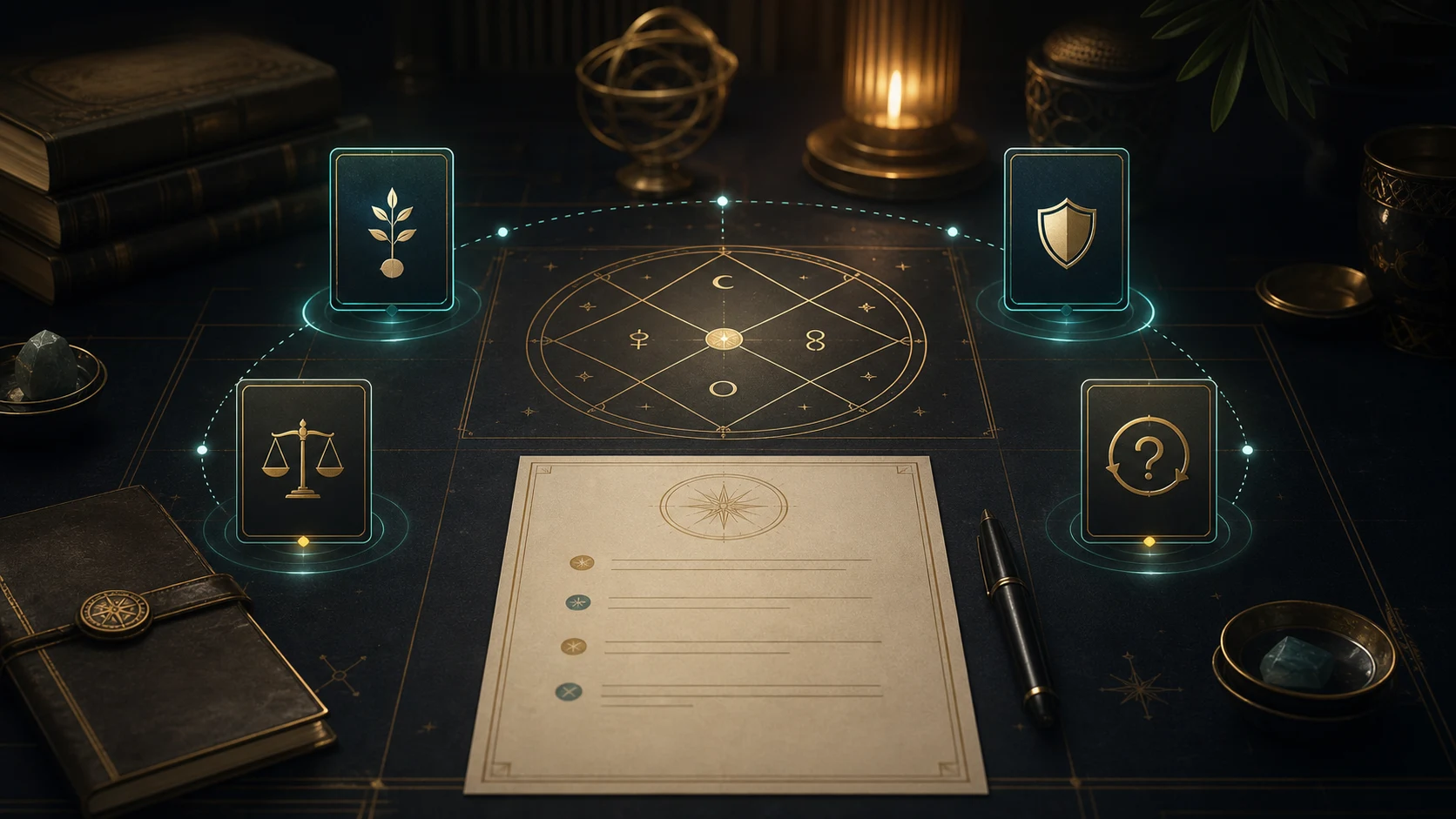
Turn evidence into a qualified answer, adding timing only where the chart supports it.
The outcomes focus on a repeatable question-intake method, transparent horary evidence, yes/no reasoning, and the maturity to leave unclear questions unresolved.
Use a steady intake process before casting or interpreting a question chart.
Move from chart setup to house choice, significators, evidence, and conclusion.
Assess binary questions without ignoring delay, mixed testimony, or uncertainty.
Communicate chart evidence with boundaries, care, and room for uncertainty.
Designed for learners with basic chart knowledge who want a focused method for specific enquiries and are willing to document uncertainty instead of forcing certainty.
You already understand basic planets, signs, houses, lords, and chart structure.
You want to study one specific enquiry rather than a full natal life reading.
You prefer a documented evidence sequence over isolated intuitive statements.
You want to add a careful question-chart workflow to existing chart practice.
You want stronger intake, uncertainty, refusal, and communication habits.
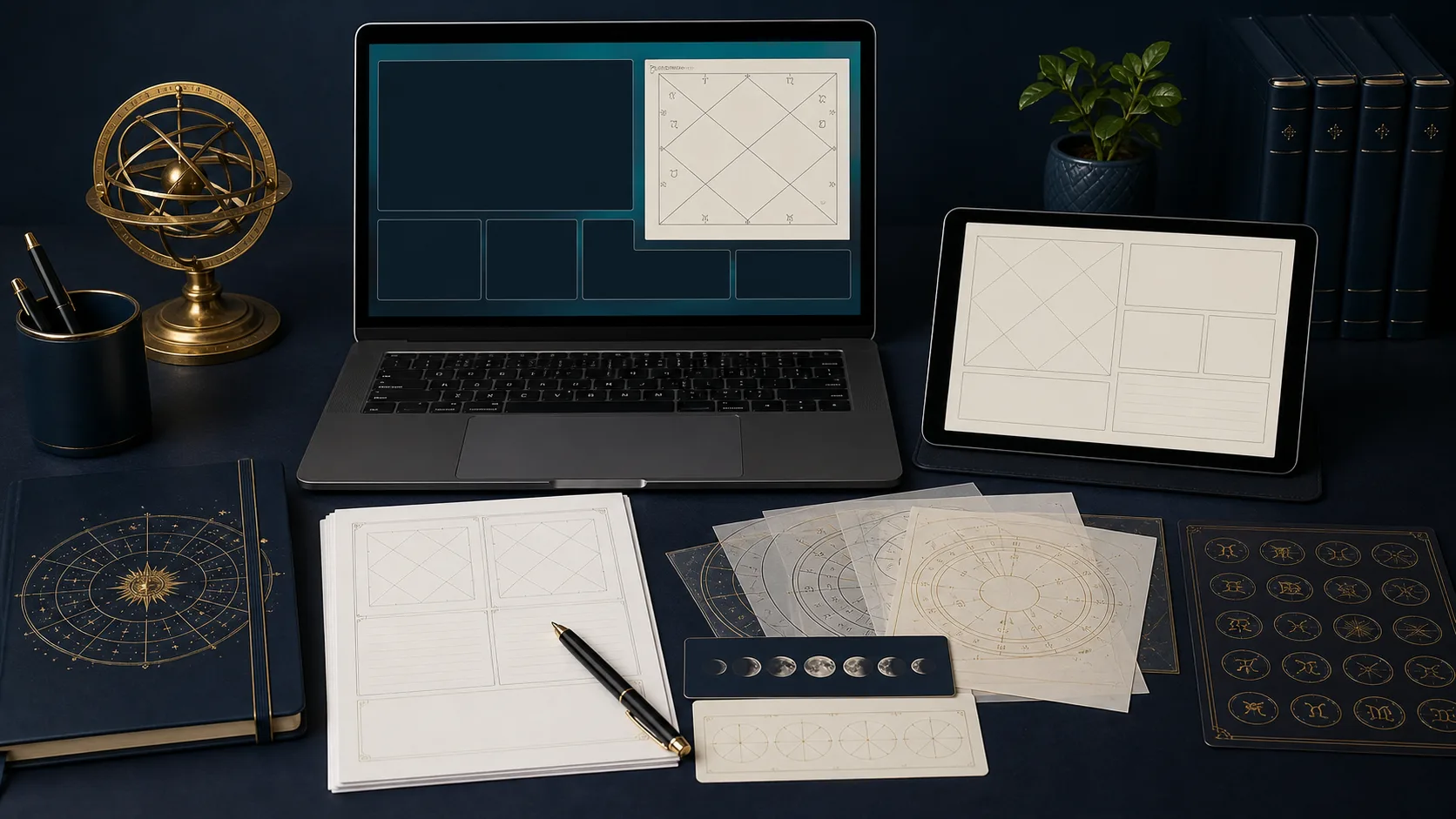
The course combines live demonstrations with reusable intake, chart-check, significator, evidence, timing, and judgement templates for consistent case practice.
Follow each Prashna stage through focused demonstrations and guided chart discussion.
Use structured sheets for wording, context, chart moment, scope, and consent.
Map significators, testimony, timing cues, uncertainty, and the final judgement.
Review house selection, mixed evidence, timing choices, and questions that should be declined.
Use a phone, tablet, or laptop and the question-chart tools identified for the batch.
Practice clear boundaries for health, legal, financial, mental-health, and third-party matters.
Batch-specific timing, recording availability, teaching language, and completion details are shared during registration.
Clear answers about prerequisites, question framing, chart practice, timing, repeated enquiries, course materials, and responsible limits.
Prashna Shastra Course
Share your details and we'll send the course outline, learning flow, and next-step guidance.