
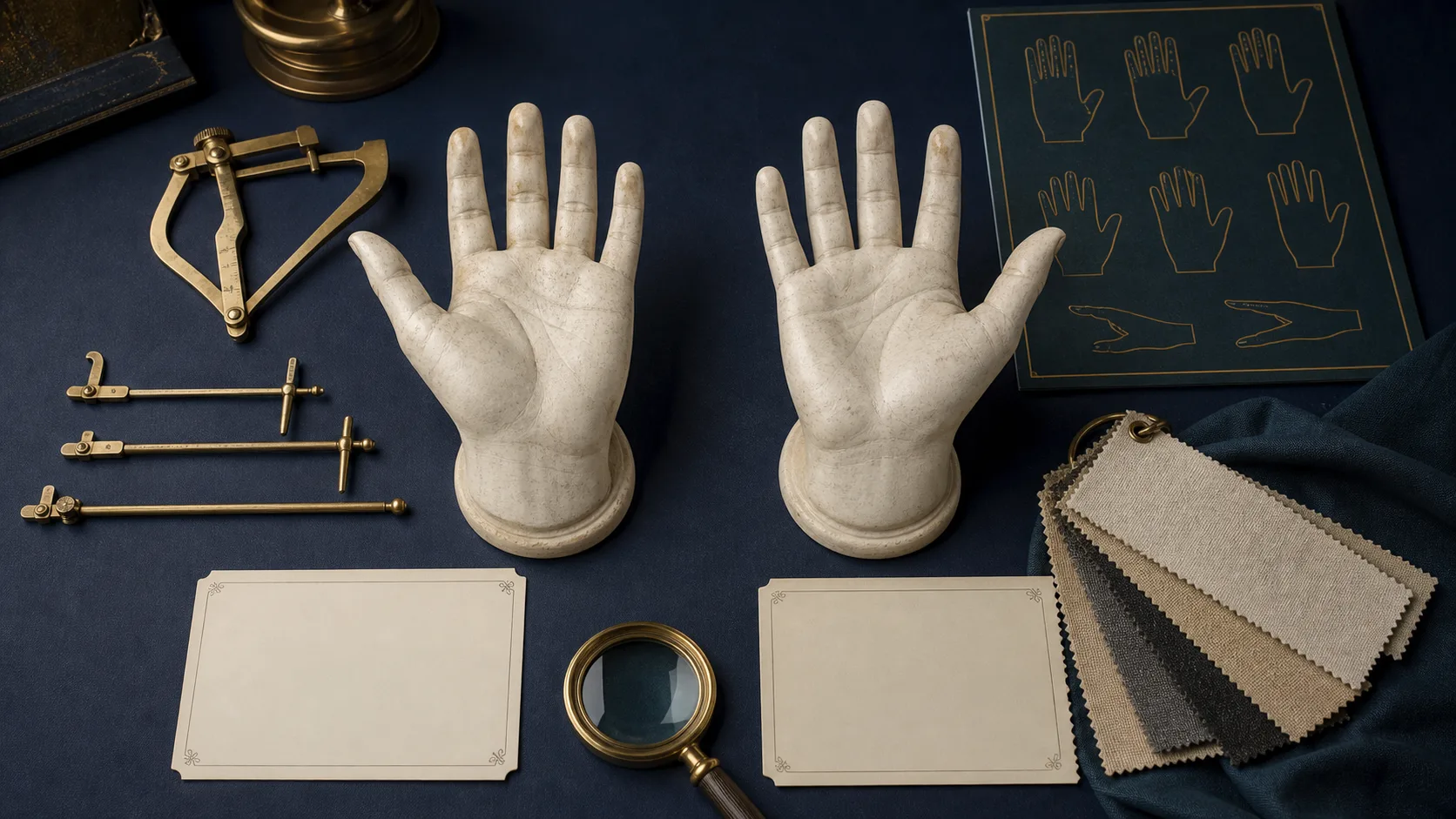
Hand Foundations
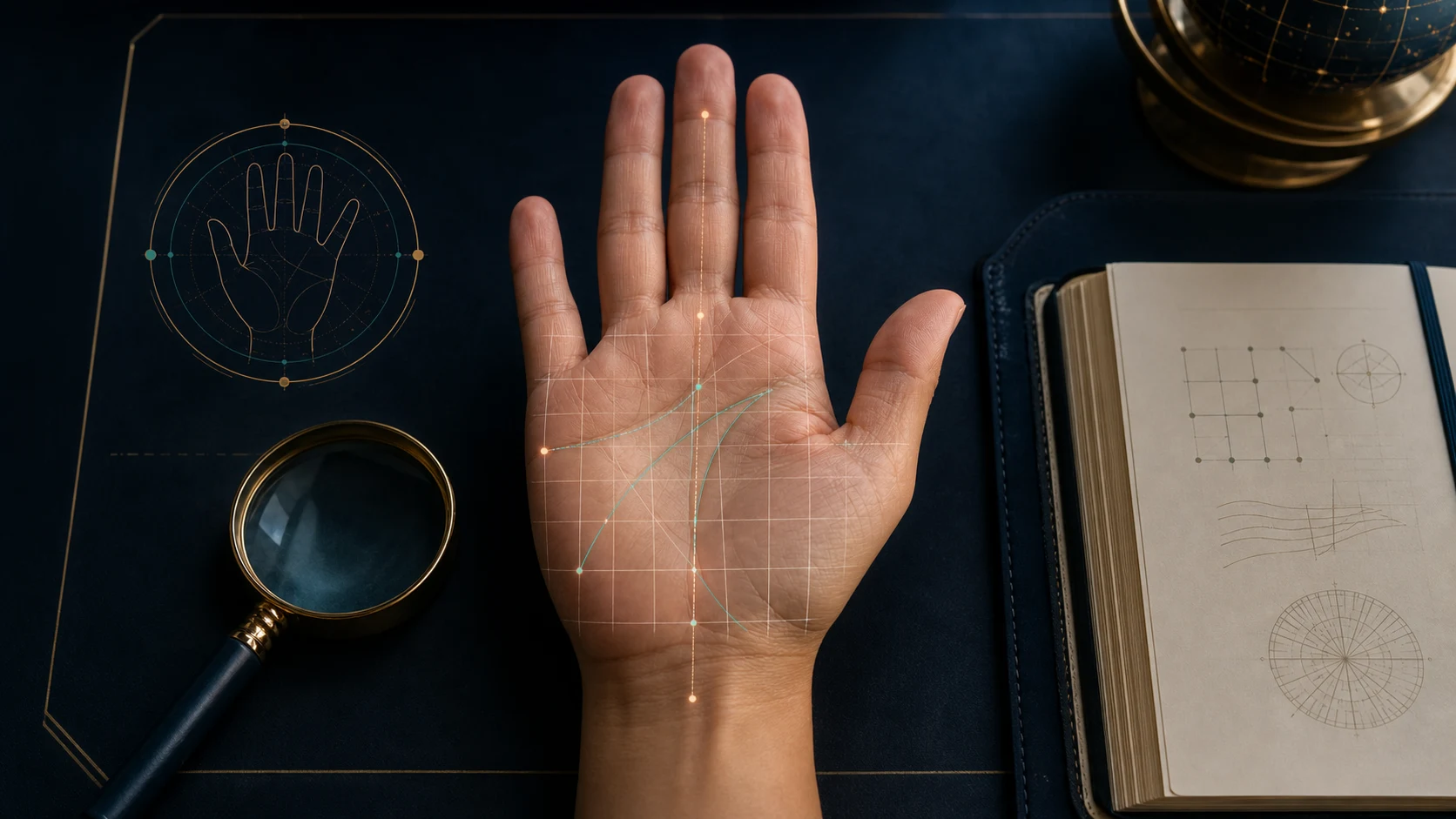
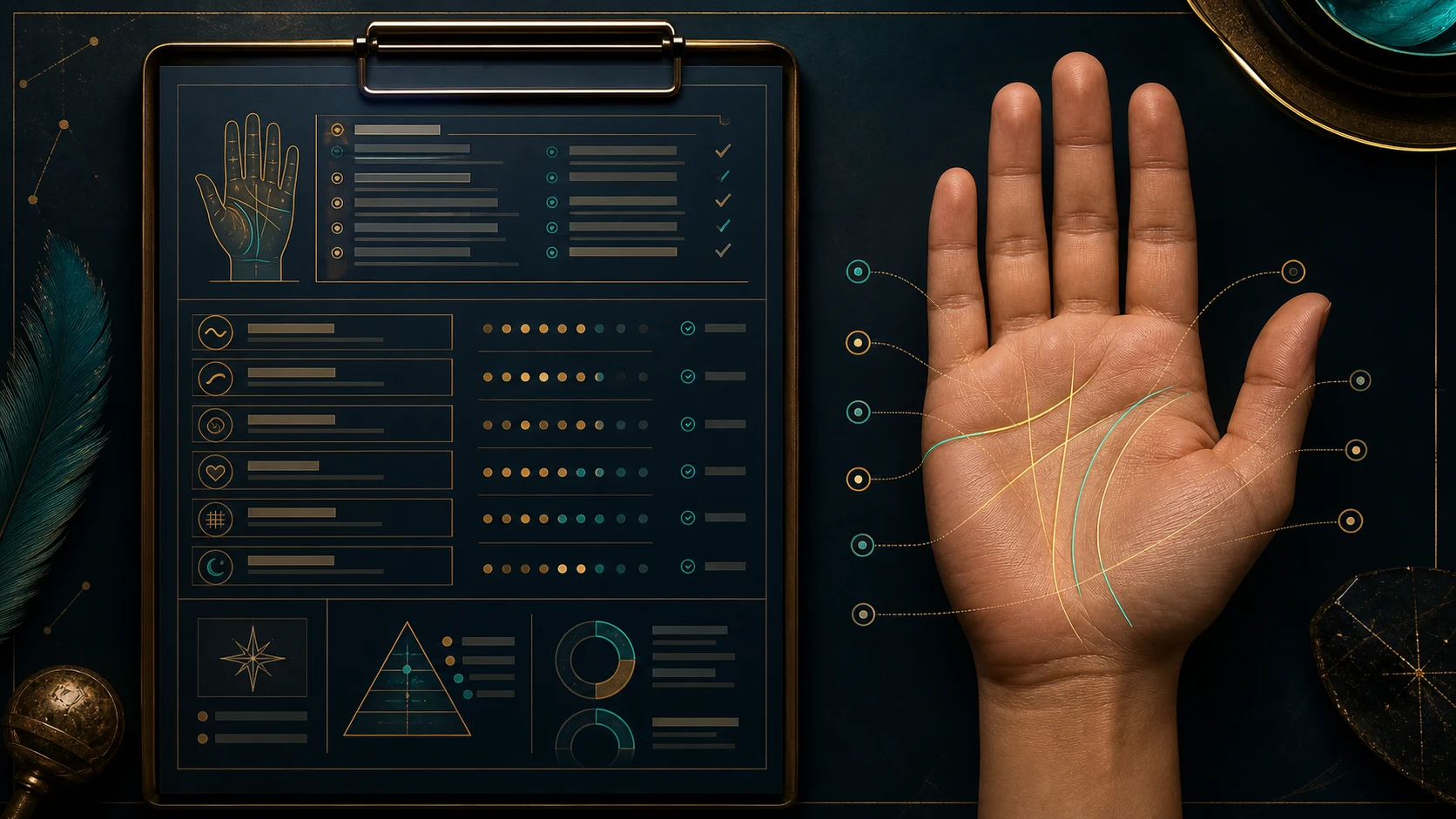
Begin with consent, clear hand photographs or prints, active and passive hand conventions, overall shape, proportion, texture, flexibility, color, and broad structural observations.
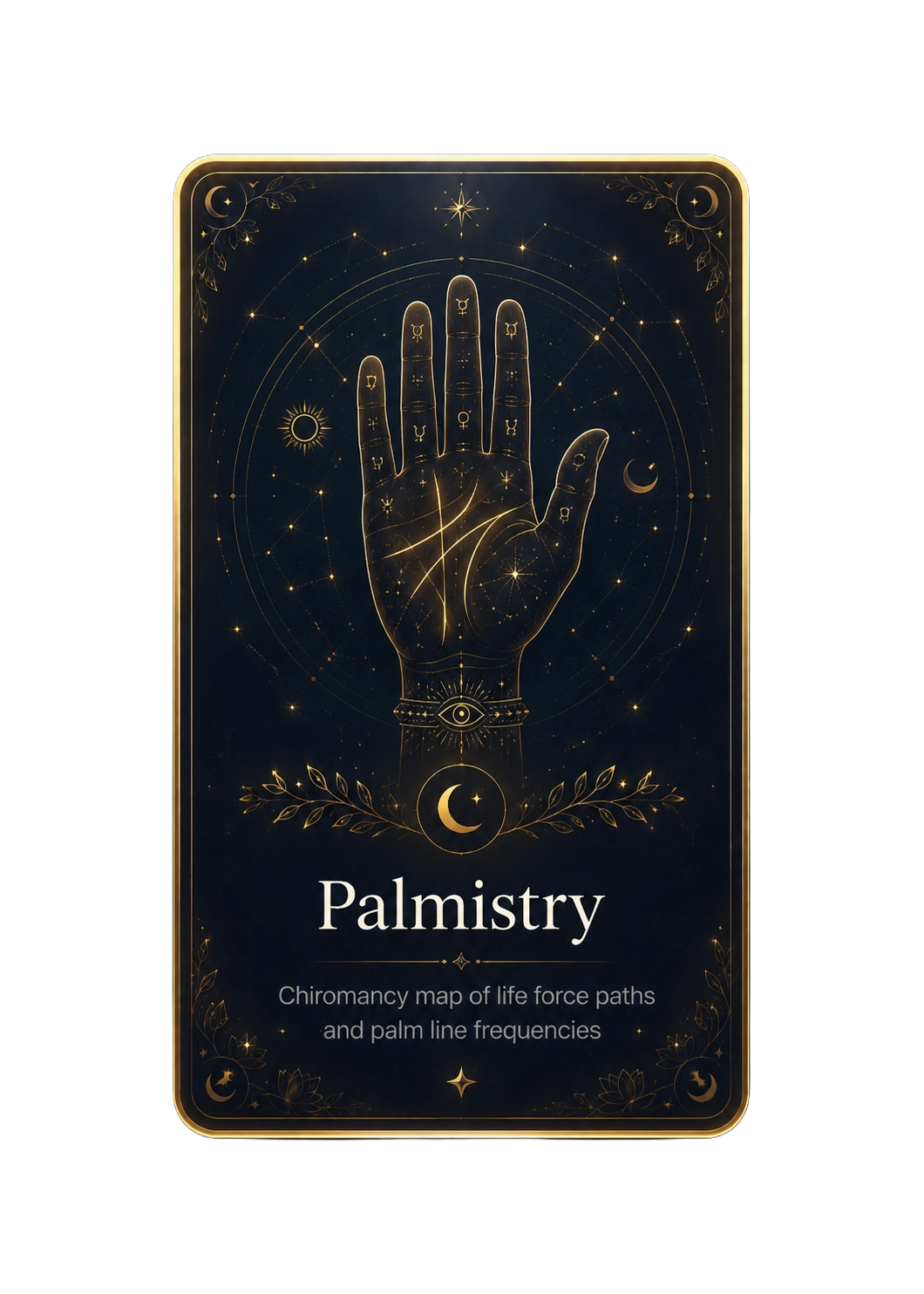
Study hand structure, mounts, lines, markings, and both-hand comparison through guided practice.

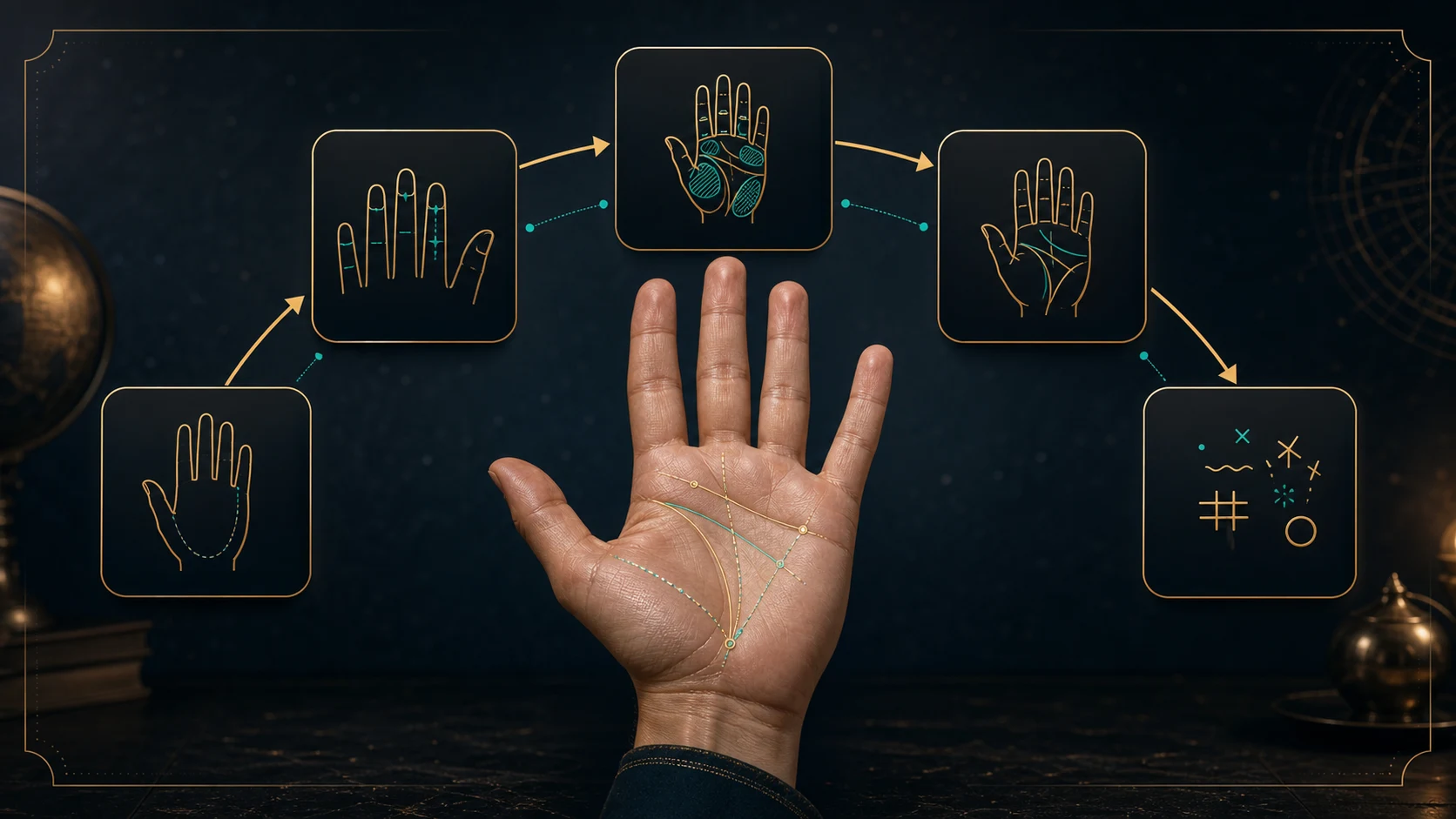
Train the eye to move from the whole hand into details: hand type, fingers, thumb, mounts, lines, markings, and careful left/right comparison.
Begin with consent, clear hand photographs or prints, active and passive hand conventions, overall shape, proportion, texture, flexibility, color, and broad structural observations.
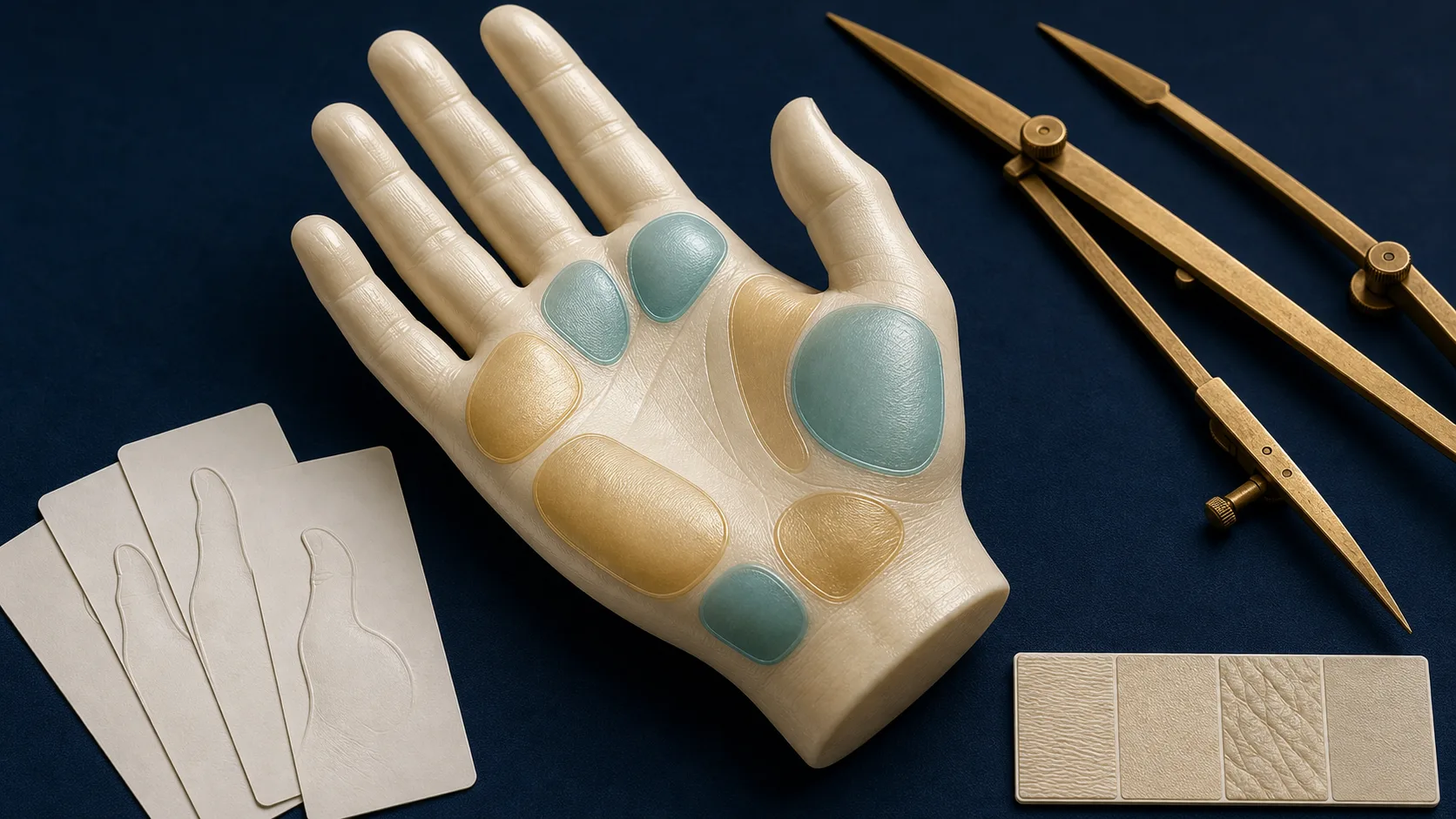
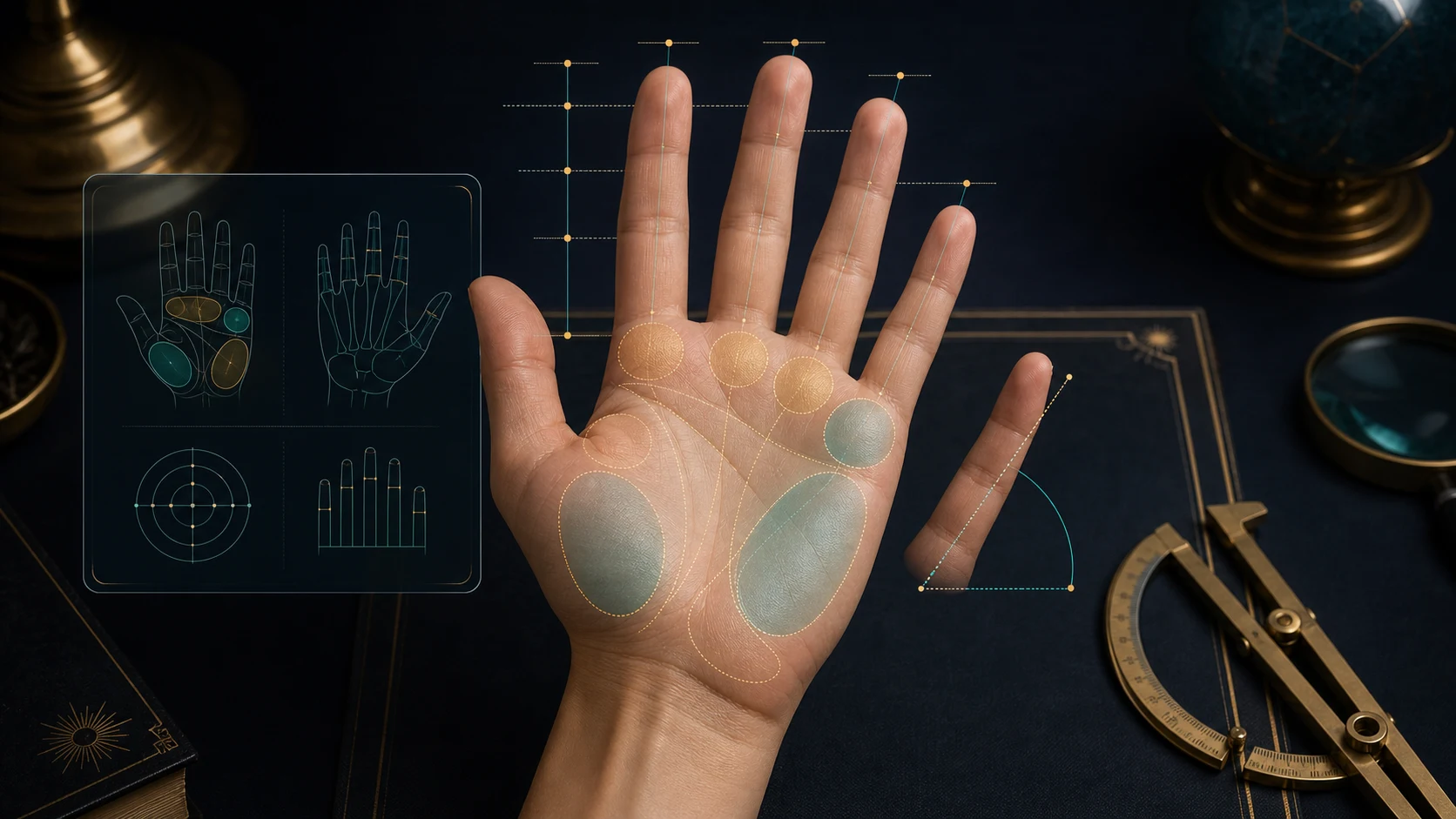
Study finger length and setting, phalanges, tips, spacing, flexibility, thumb angle and proportion, and the development and balance of the palm's mounts and plains.
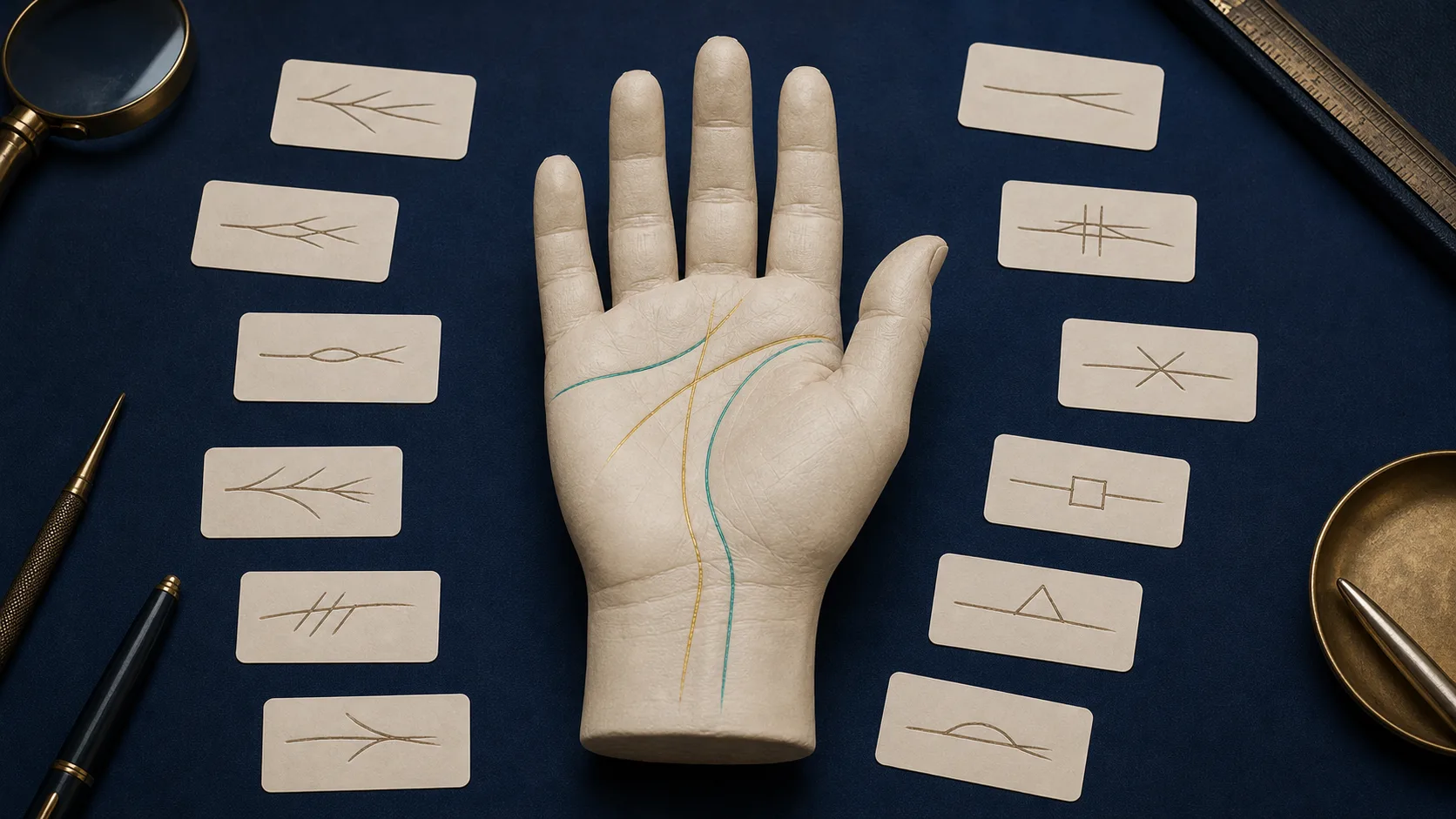
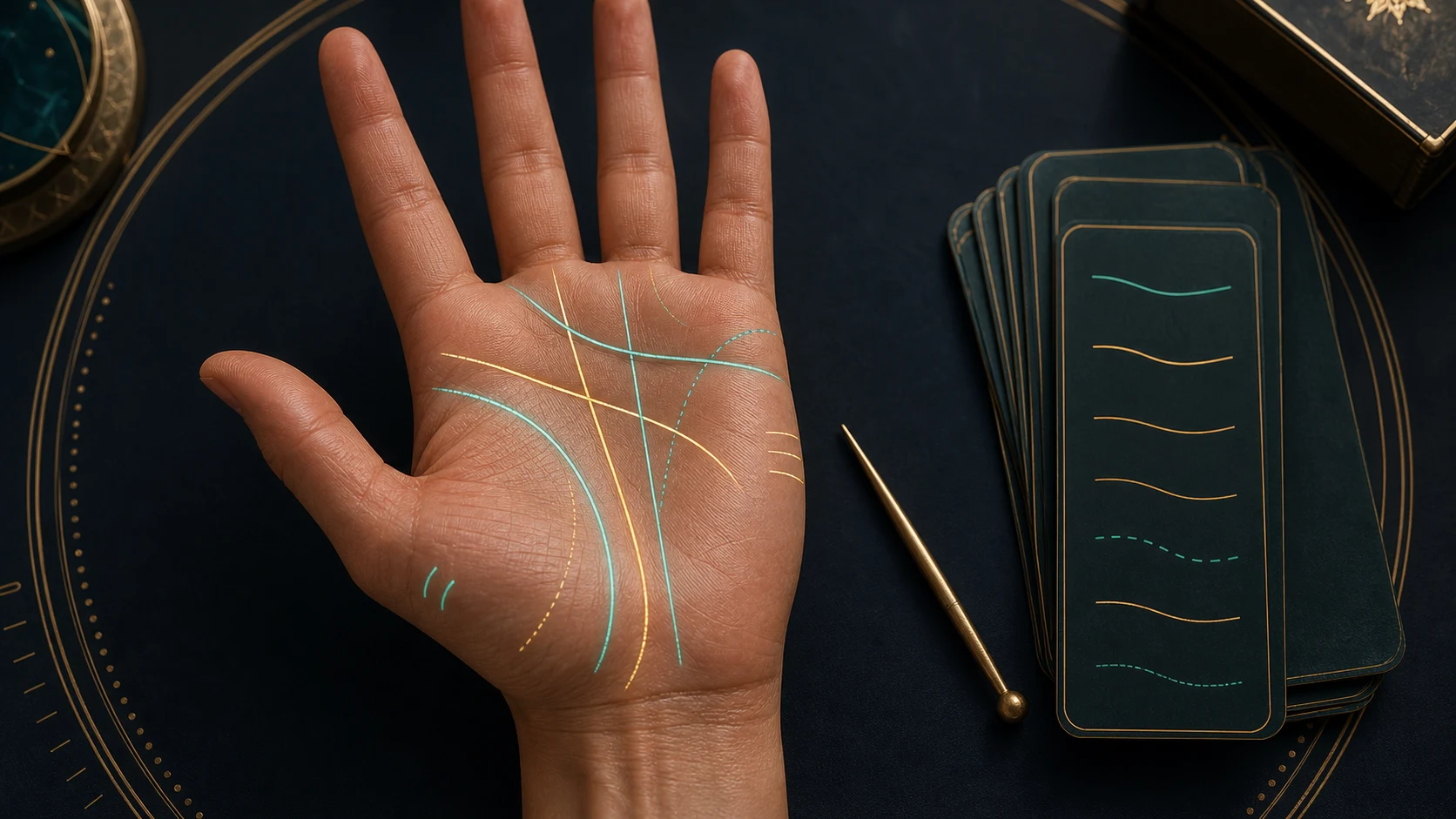
Identify the heart, head, life, and fate lines before adding secondary lines, branches, forks, breaks, islands, crosses, squares, triangles, and other contextual markings.
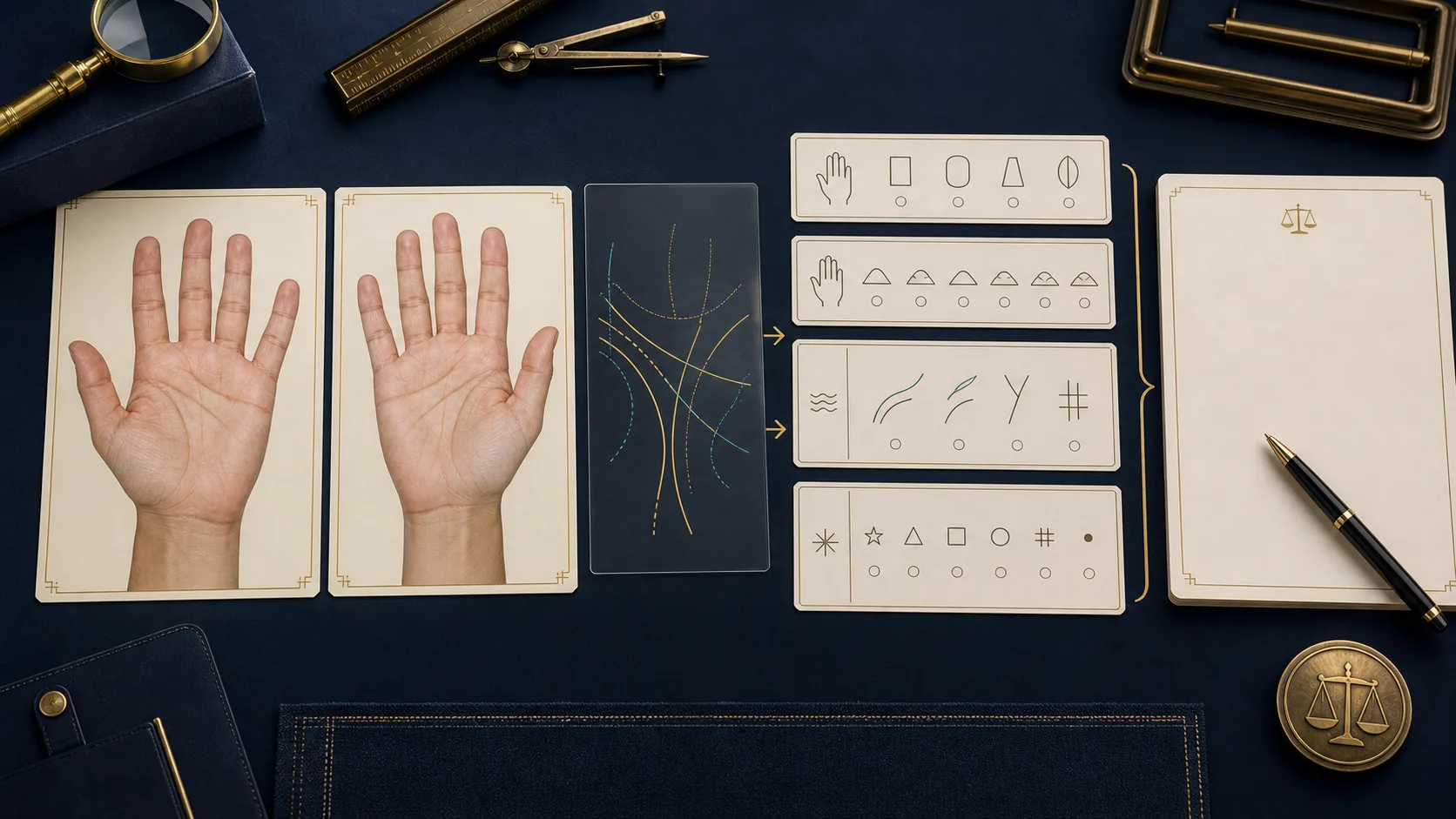
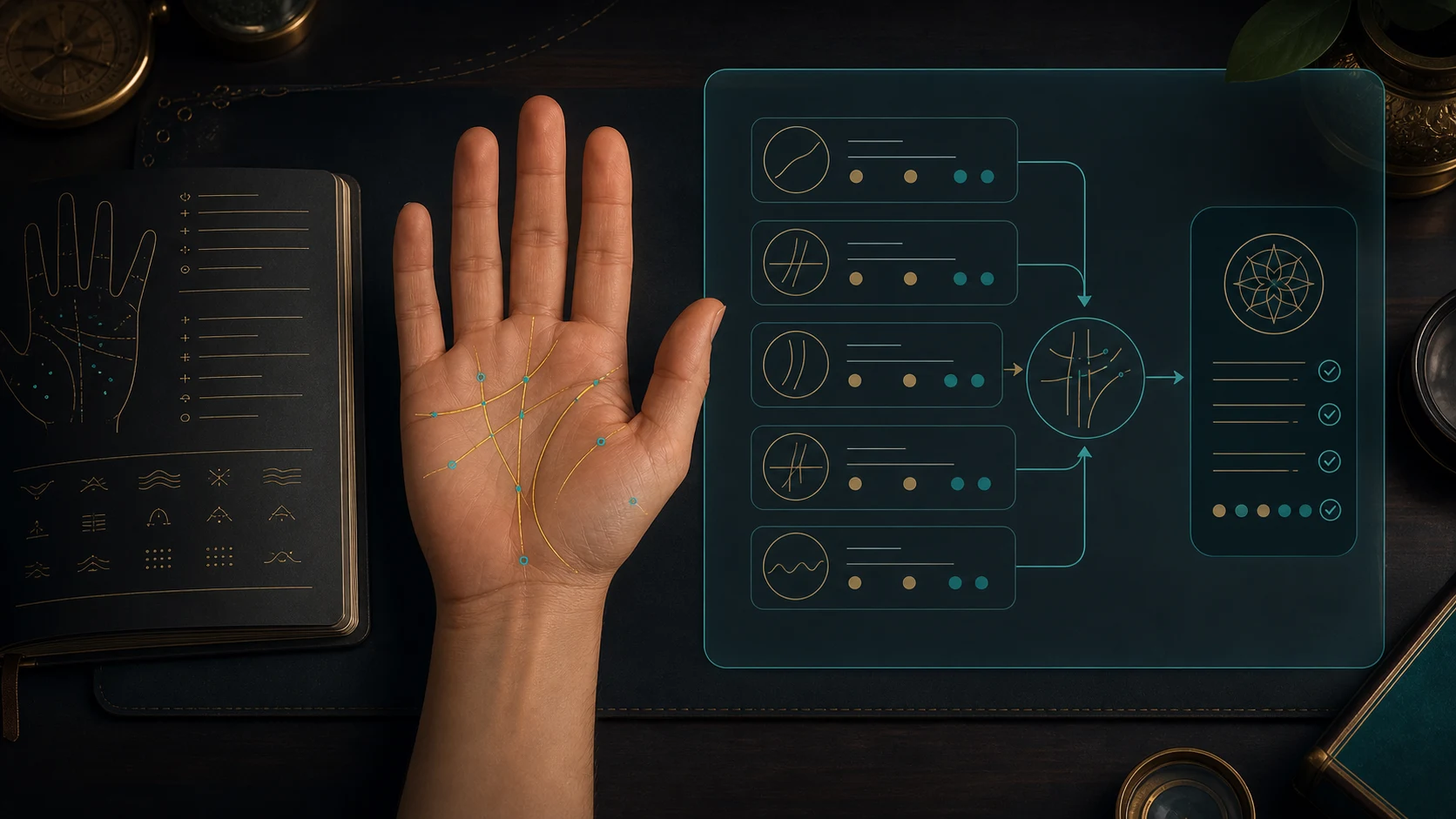
Compare both hands, organize corroborating and contradictory observations, add timing conventions cautiously, and write a balanced reading without relying on one dramatic sign.
The curriculum follows a broad-to-specific hand-reading sequence. Learners document first, observe structure before lines, compare both hands, and communicate every interpretation within responsible limits.
Build reading skill through focused drills that separate observation, identification, comparison, and written synthesis.
Document the whole hand before interpreting any single line.
Trace major and secondary lines by structure, not assumption.
Read mounts, fingers, and thumb as supporting evidence.
Turn observations into clear, reviewable reading notes.
The outcomes focus on disciplined observation, both-hand comparison, coherent synthesis, privacy, and responsible communication.
Build a repeatable sheet for observations, evidence, synthesis, and boundaries.
Follow a steady sequence from whole-hand form into detailed features.
Compare left and right hands without relying on gendered shortcuts.
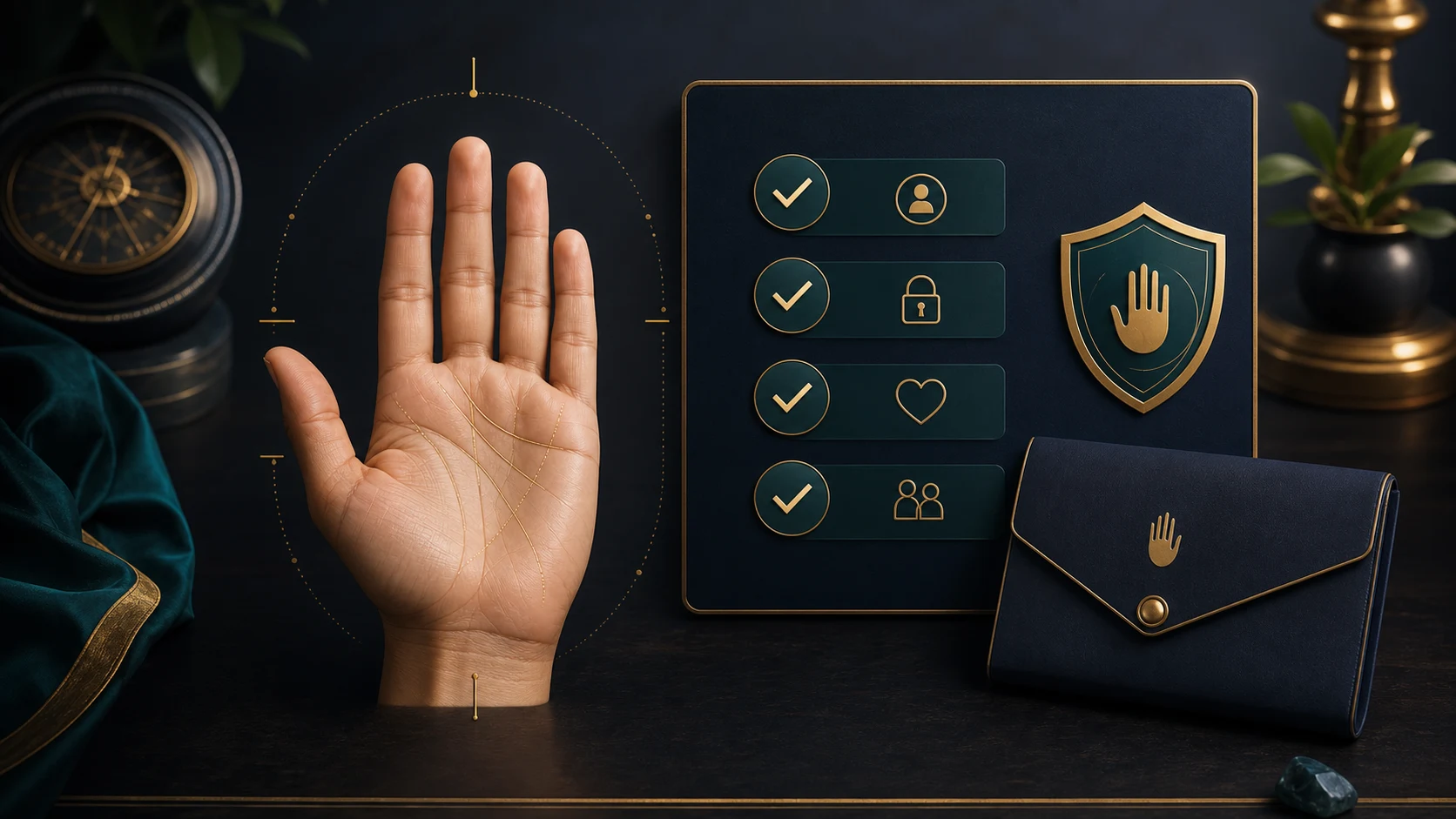
Practice readings with consent, privacy, careful language, and clear limits.
Designed for beginners and existing readers who want a structured, consent-based palmistry method and are willing to observe the whole hand before interpreting individual signs.
You want a broad-to-specific method and are willing to train observation before interpretation.
You want to explore palmistry as a traditional symbolic framework without fixed predictions.
You want to add hand analysis as a separate practice with its own structure and ethics.
You want cleaner hand records, stronger synthesis, and more responsible client language.
You want a repeatable consent-to-reading workflow with privacy and referral boundaries.
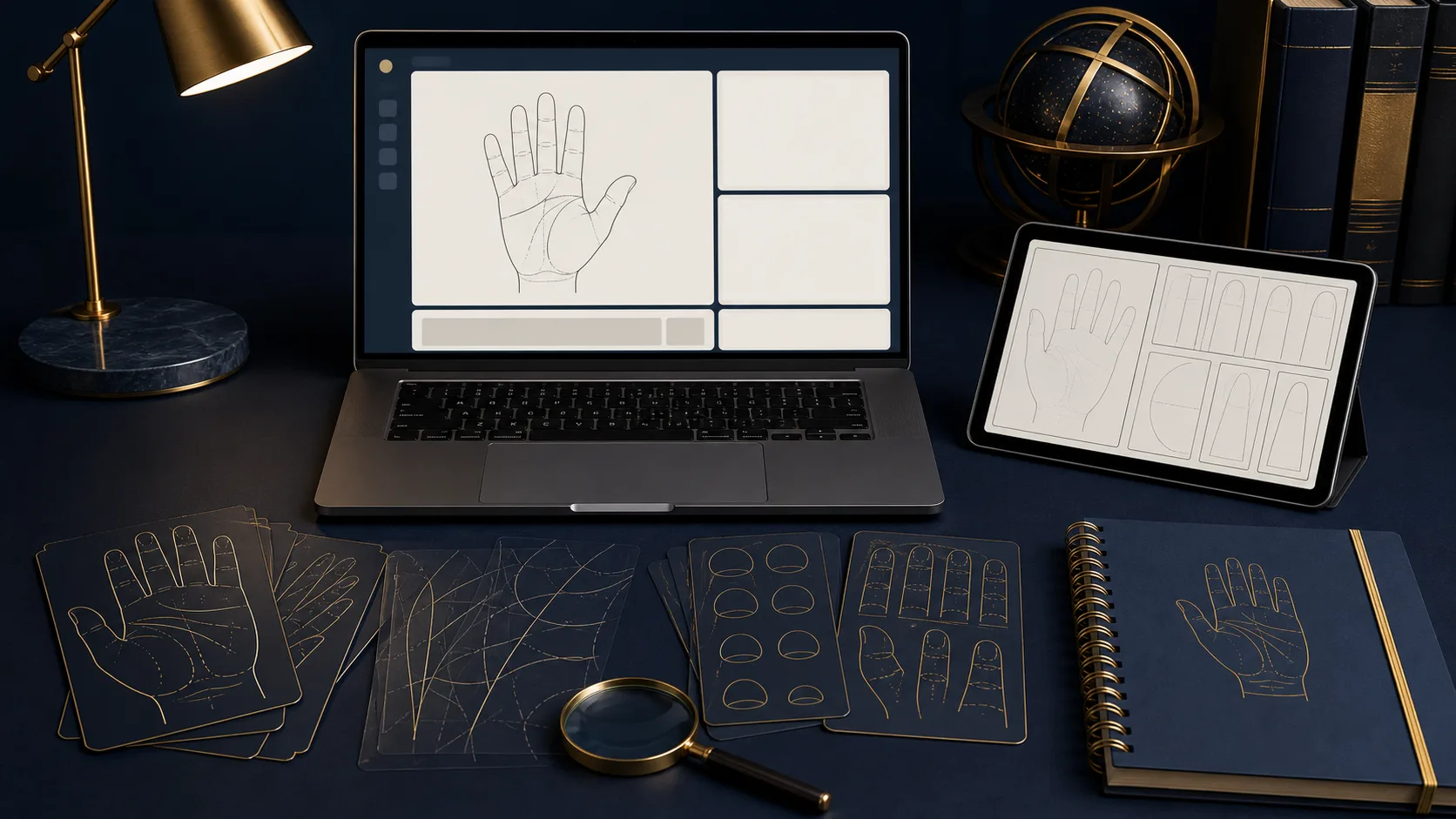
The course pairs live demonstrations with hand-image checks, observation worksheets, line overlays, mount maps, marking references, and complete reading templates.
Follow hand structure, mounts, lines, and synthesis through focused demonstrations.
Use broad-to-specific templates for both-hand comparison and reading notes.
Practice with prepared, consented, or anonymized examples selected for each topic.
Review ambiguous lines, markings, mount boundaries, and contradictory observations.
Organize consent, observations, interpretation, uncertainty, and final communication.
Keep health, lifespan, pregnancy, legal, financial, and other high-impact matters outside predictive claims.
Batch-specific timing, recording availability, teaching language, and completion details are shared during registration.
Clear answers about prerequisites, which hand to read, the life line, mounts, markings, timing, image privacy, course materials, and responsible limits.
Share your details and we'll send the course outline, learning flow, and next-step guidance.